My main idea going into this shoot was to try to mimic the damage that would be caused in any of the wildfires that desiccate different countries every year like the Californian Campfire that has devastated thousands.
Image Bank:


Shoot Influence:
Camp Fire in California

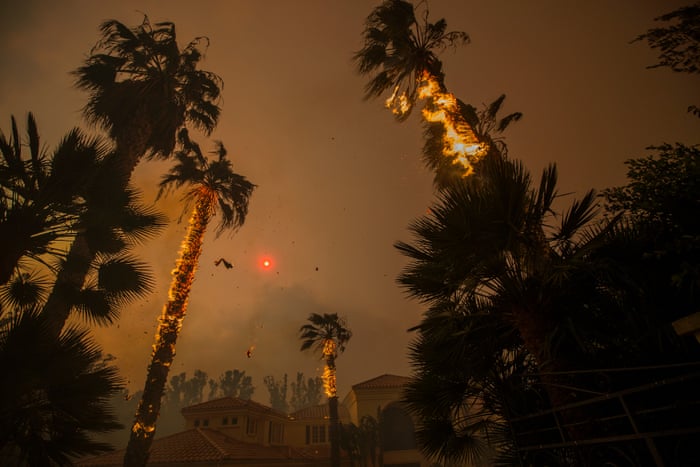
In California a forest fire being called 'Camp Fire' is finally under control after taking the lives of 63 with 631 people still unaccounted for.
Official advice is not to try to outrun a forest fire but to find a body of water or land with low vegetation, lay down and cover yourself with wet clothing or top soil.
Governments use fire breaks that are breaks between two tree lines to stop a fire from spreading, another precaution taken is controlled burning of the top layer of branches and twigs so that the fuel element is removed.
https://edition.cnn.com/2018/11/15/us/california-fires/index.html
Photographer's Research: David McNew
David McNew is a photojournalist based in America. He is based in California, Pasadena near the San Gabriel Mountains and so was one of many residents that were affected by Campfire. Despite this tragedy he was perfectly poised to document the evacuation of the other residents and the approaching blaze.
McNew was a professional musician until his passion for the wild life photography became his soul focus and he started spending days and months in the wilderness documenting the different species that he came into contact with, in particular the Peninsular Desert Bighorns. He is currently employed by Getty Images - an American stock photography company and is now capturing the lives of politicians, celebrities current events such as Coachella and the escalating tension on the America- Mexico border.
I wanted to investigate this work as he was at the front lines of the wildfire taking photographs of the inferno but also of the people that were running from and towards the natural disaster.
Below is the link to his website:
https://www.davidmcnew.com/ or https://www.davidmcnew.com/about for information on his career.
Contact Sheets:


Images that need improvement:
DS7_5973 and DS7_5974:
Both of these images were too dark and so it is difficult to see what is in the photographs. I changed the f-stop to brighten the image as this would give me a bright enough baseline for when I was shooting the pine cones and the flames go out. You can see this improvement in the next image in the series DS7_5976.
DS7_6011 and DS7_6025 :
These images are too bright for the effect I was going for and removes some of the atmosphere that I was trying to create in my images. To improve this I changed the lighting rather than the camera settings as I had the camera in aperture priority and the f-stop was set to where I wanted it to be. It seems bizarre to change the studio settings rather than the camera, however I was trying to shoot a flame and so if I kept the camera on manual settings it would take to long to change before the flame burnt out. To avoid this I chose aperture priority so that the camera would decide the shutter speed because it is much more accurate and faster than I am. You can see the improved image in DS7_6031.JPG.
I also moved the camera in images DS7_6023 and DS7_6024 and so there is are strange lines due to camera blur. After these images I put the camera back on the tripod and so the issue was resolved.
Best Images:


A03: Record ideas, observations and insights relevant to intentions. reflecting critically on work and progress.
My main idea for this shoot was to record the speed at which the leaves and pine cones burn using a macro lens and low f-stop so the majority of the focus would be on the fire.
I am pleased with my best images as the pine cones burnt slowly and so I was able to take pictures of them while they were alight but also their burning embers. To improve my best images I would light the pine cones using something other than matches as they burn slowly and it was difficult to get a decent shot of the embers and the flames. If I were to conduct this shoot again I would look for a windproof lighter as the flames are stronger and will be more effective.
My worst images in this shoot were my learning curve so that I would be able to adjust my studio until I had the correct lighting etc. I also used them to decide whether I would be using a tripod for the whole shoot or handheld and although the few shots I did take handheld were blurry and obscure I do like the images that were created, they just weren't the effect I was trying to create.
A02: Explore and select appropriate resources, media, materials, techniques and processes, reviewing and refining ideas as work develops.
I was mainly using a tripod and remote release with my Nikon D7200 and a 60 mm Macro lens. I kept my camera on Aperture priority as I was focusing on creating a large depth of field. I created the miniature landscape using a plate covered with soil and pre-foraged leaves and pine cones from outside, this was good as the pine cones had dried off and so were flammable and the soil provided a controlled environment to burn them.
I was also very conscious of my composition in this shoot as I wanted to keep the viewers focus on the leaves and pine cones.
A01: Develop ideas through sustained and focused investigations informed by contextual and other sources, demonstrating analytical and critical understanding.
I used my research to influence this shoot as I wanted to investigate what it would have been like to be present in one of the forest fires and how the fire would have burned. This links to my theme of time as forest fires are a continuous threat to those who live in dry countries that have large expanses of vegetation and woodlands. I wanted to display how it is possible that entire livelihoods and counties can be laid to waste in a single night and to do this I looked at what caused the fire = fuel.
A fire needs three things: oxygen, fuel and heat. Too often a hot climates provides all of these things and so the slightest of sparks from either man made campfires or natural storms can demolish entire landscapes and lives. The heat dries out the debris on forest floors while provides perfect tinder for fires, there is a precaution called controlled burning where the top layer of debris is burn deliberately so that it can't build up and contribute to a larger fire.
My two different materials that I burnt show how deadly forest fires are and how quickly they spread. The leaves burnt quickly and resulted in a large flame, however the pine cones burnt slowly and can even be used as fire starters for campfires and barbecues. Despite being highly flammable there is a species of pine called the Lodgepole which relies on heat to open the pine cones.
Improving my images:
To improve my images I opened them in Photoshop. As I was shooting in RAW+JPEG format I have two copies of each image. The small JPEG files I use for contact sheets as they take less time to load and the large RAW files are the ones I use for editing. I opened all of my best images in Photoshop in RAW format which meant I had access to sliders that I use to alter the images before actually opening the file, like so:

In some of my images there were imperfections such as the lighter I used to ignite the pine cones and so I used the clone tool to remove it.

Here is the final result:

I also notice that my images were very grainy and so I applied a filter to obscure the large pixels. I decided on the filter 'Paint daubs' as it works with the grain in the images.

I repeated the same process for all of my other images.

This image also had a large area of negative space on the right than the left so I cropped the image to balance it.
Final Images:


A04: Present a personal and meaningful response that realises intentions and, where appropriate, makes connections between visual and other elements.
I feel I have produced a meaningful response to my artist research into David McNew and my research into the causes and precautions surrounding forest fires. Forest fires that can cut someone's life short, spread faster than a human can run or allow new life to blossom in the form of Lodgewood Pine. Time is relative and moves at different speeds depending where you're standing.
This statement sounds strange but time would move a lot faster if you were trying to escape a forest fire than if you were waiting for something to cook in the microwave.
For a further shoot or a development on this shoot I would like to combine my images of a pine forest - landscape and a burning pine cone to show the two ends of the same @spectrum' using different layers and transparencies in Photoshop.


